
26°C 28°C
Fortaleza, CE
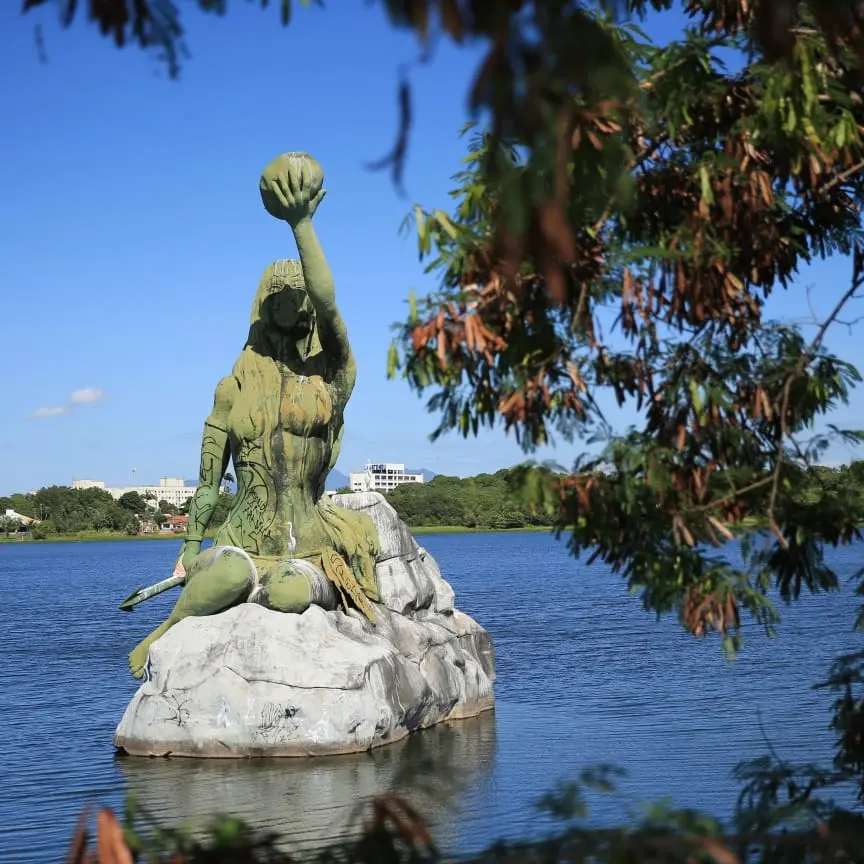
Summary: Messejana is one of the oldest neighborhoods in Fortaleza, located in the southeastern part of the city. It was a village and independent municipality until 1921, is the birthplace of the writer José de Alencar, and its iconic landmark is the Messejana Lagoon, with its statue of Iracema. It is also one of the main commercial centers of the capital and is on the way to the east coast. In this guide, Hoje no Ceará brings together what to do, where to eat, how to get there, and a bit of the neighborhood's history.
This guide is part of our guide Fortaleza, featuring beaches, tourist attractions, and tours in the capital.
In this guide:
Messejana is located in the southeastern part of Fortaleza, about 15 km from the city center (approximate distance, which varies depending on the starting point). Because it is large and has its own distinct character, many people call the region "Greater Messejana," including neighboring districts that grew up around it.
Before the arrival of the Portuguese, the region was inhabited by Potiguara indigenous people. In the 17th century, Jesuit missionaries organized a settlement there called São Sebastião da Paupina, which gave rise to the town.
In the 18th century, the former village became a town and was named Messejana, a reference to a place of the same name in Portugal. For a long time, Messejana was an independent municipality, with its own economic life and importance as a transit point for those heading towards the capital.
It was in Sítio Alagadiço Novo, in Messejana, that the writer José de Alencar was born in 1829. Author of Iracema, he used the lagoon and the region as the setting for his most famous work in Ceará.
On October 31, 1921, a state law annexed Messejana to Fortaleza, along with Parangaba. The former village became a district and, later, a neighborhood of the capital. The Messejana Public Cemetery, inaugurated in 1836, is considered the oldest in Fortaleza.
It's the neighborhood's postcard image. Messejana Lagoon is the second largest in Fortaleza and is part of the Cocó River basin. In the middle of the water is the sculpture "Banho de Iracema" (Iracema's Bath), inaugurated in 2004, standing 12 meters tall, representing the character from José de Alencar's novel taking a bath with a gourd.
The surrounding area was redeveloped by the city government in 2024 and features a boardwalk for walking, running, and watching the sunset. Swimming in the lagoon is not recommended; the idea is to enjoy the shoreline and the scenery.
The site where the writer was born is now a cultural center of the Federal University of Ceará (UFC). The area includes the preserved little house, the ruins of the first steam-powered sugar mill in Ceará, the Arthur Ramos Museum, the Floriano Teixeira Art Gallery, a library, and plenty of green space. It is located on Avenida Washington Soares, in an area that now forms the José de Alencar neighborhood, next to Messejana.
It operates on weekdays and Saturday mornings. Confirm hours and schedule on the official UFC website before going.
The Parish Church of Our Lady of the Conception preserves the memory of the old village, built on the site of the first chapel constructed by the Jesuits. It is a good starting point for exploring the old center of the neighborhood.
Near the lagoon and the bus terminal, the market brings together stalls selling food, regional products, and simple meals. It's a good way to see the neighborhood's daily life up close.
It's the most well-known gastronomic address in the region. Located on Avenida Washington Soares, towards CE-040, it brings together dozens of tapioca stands organized in an association. There, the tapioca is made to order, with fillings ranging from coconut to sun-dried meat with curd cheese, as well as couscous, coffee, and other regional dishes. It's a classic stop for breakfast for those heading to the beaches of the east coast.
Because it's a neighborhood with a lot of commerce, Messejana has restaurants serving regional cuisine, snack bars, bakeries, and options for executive lunches. Baião de dois (a rice and beans dish), carne de sol (sun-dried meat), panelada (a stew), and fried fish frequently appear on menus in the area.
To discover the city's typical dishes, see our guide Where to eat in Fortaleza.
Messejana functions almost like a city within Fortaleza. The neighborhood concentrates shops, banks, supermarkets, clinics, and services, and serves residents from the entire southeastern region and neighboring municipalities, such as Eusébio.
Also located in Messejana is a leading public cardiology hospital in Ceará, known as Hospital de Messejana. Along with the integrated bus terminal, this makes the neighborhood a daily hub for thousands of people.
Looking for reliable services in the region? Check out the Hoje Hoje no Ceará. local guide
Planning to stay in the city? See where to stay in Fortaleza.
We are preparing detailed guides on where to eat in Messejana, the history of the neighborhood, and the Messejana Lagoon. The links will appear here as soon as each one goes live.
Restaurants, snack bars, shops, clinics, and service providers in Messejana can appear to those searching for the neighborhood on Google, with a presence on the portal, Google My Business, biosite, and NFC-based rating boards. Talk to our team via WhatsApp. All sponsored content is identified.
In the southeastern part of Fortaleza, approximately 15 km from the city center. The neighborhood is served by the Messejana Integrated Terminal and has access via Washington Soares Avenue.
The main attractions are the Messejana Lagoon with the Iracema statue, the José de Alencar House, and breakfast with tapioca at the Tapioca Center.
The sculpture "Banho de Iracema" is 12 meters tall and was inaugurated in 2004.
Yes. The writer was born in 1829 in Sítio Alagadiço Novo, where the José de Alencar House, belonging to UFC (Federal University of Ceará), is located today.
In 1921, a state law annexed the former village of Messejana to the capital, along with Parangaba.
It is not recommended. The lagoon is used for walks on the boardwalk, contemplation, and photography.
Updated October 1, 2026. Hours, addresses, and operating hours are subject to change; please confirm before visiting.